写公众号最好的时机是五年前, 其次是现在.
==> 所以我俩月前注册了个微信公众号🐱:

而拖延两个月以后, 这周末体验了撰写和 …
看了Resocoder和Robert Brunhage的两个视频, 这篇总结一下其中的内容(我其实还没实践过).
本文主要参考自:
- pub package
- Video by Robert Brunhage
- Tutorial by Resocoder
Flutter hooks想解决的问题是StatefulWidget的一些常见pattern太复杂 …
这篇文章主要总结了FlutterEngage里的这个talk:
(这个talk的名字的中文翻译挺牛的: "小事一桩:成为开发和设计俱佳的神级人物")
talk里代码地址在: https://github.com/filiph/little_things
这个talk还是挺有意思的, 介绍了如何提升App的设计细节从而获得更高的 "Perceived value …
Dart默认的linter配置有点弱, 有很多有问题代码也不报错或警告. 添加一个analyzer可以应用dart的最佳代码实践, 对一些不好的代码风格提出警告或者直接报错, 从而提高代码质量.
Cf …
我的这个pelican博客已经有八年多了, 从最开始使用pelican2.x+bootstrap2主题到现在使用pelican3, 断断续续经过了各种折腾.
现在的blog虽然文件内容还很乱, 但是网页样式我基本满意. 问题就是pelican3加上我自定义的主题/插件 …
本文总结了Flutter Explained关于fvm的视频: https://youtu.be/R6vKde1vIGQ
flutter有很多channel: stable/beta/dev/master, 而目前有些功能只在某个channel上可用, 比如Linux support目前只在dev channel支持.
我日常用的是beta channel, 但是想写Linux程序时每次flutter channel dev …
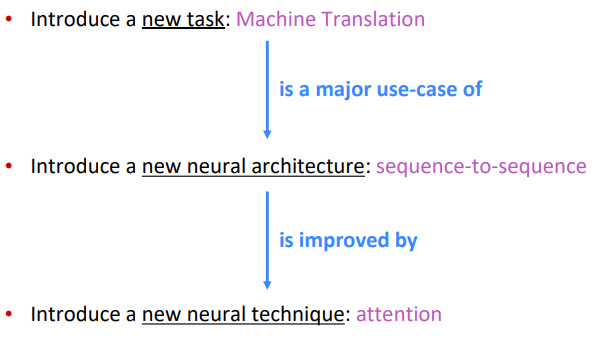
1990s-2010s: Statistical MT (SMT)

using Bayes rule: P(y|x) = P(x|y)*P(y) / P(x)
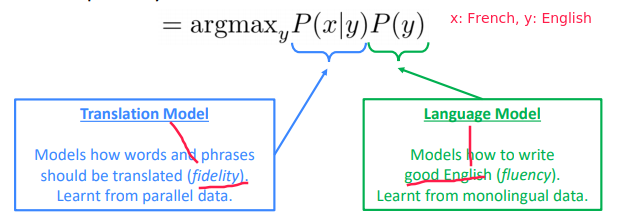
⇒ The language model we already learnt in prev lectures ⇒ To get the …
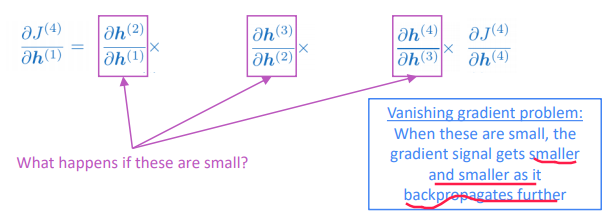
ex: grad of loss at position 4 w.r.t.hidden state at postion 1
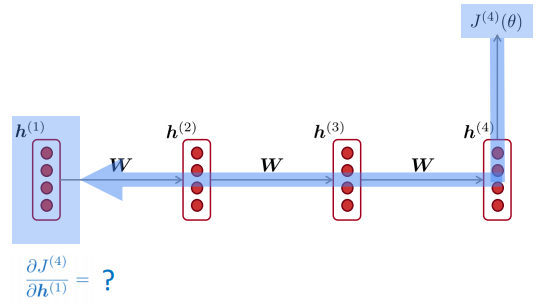
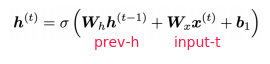
with chain rule, the grad is smaller as it backprops
 ⇒
⇒

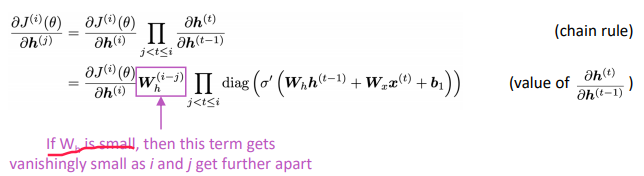
If the largest eigenvalue of Wh is less than 1, the gradient J_i/h_j will exponentially shrink.
Language Modeling: task of predicting what words come next.
i.e.compute the conditional probability distribution

a language model can also be viewed as a system to give probability to a piece of text.
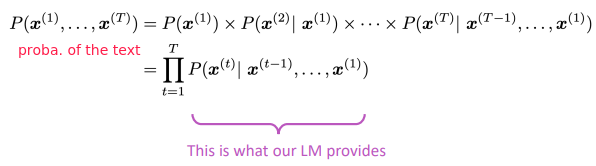
n-gram Language Model: pre-deep learning solution for language modelling.
idea: Collect …
Phrase structure: organize words into nested constituents.
context-free grammars (CFGs)
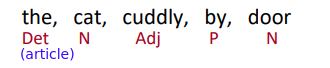
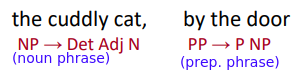
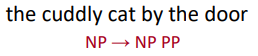
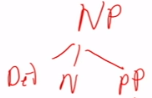
⇒ forms a tree structure: