Recap: Functions and Pattern Matching

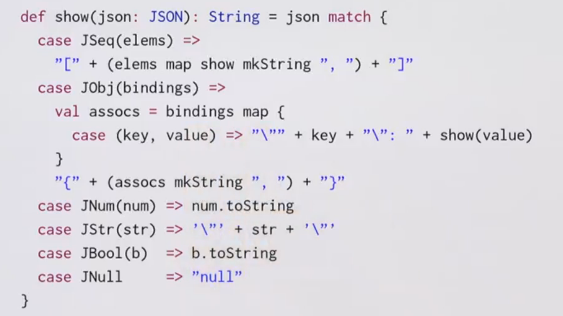
case classes

ex: json json objects can be seq, num, str, bool,...

⇒ represented as abstract class and case classes.

pattern matching

→ question: what is the type of the {case(key, value)=>"..."} clause?

it is (JBinding => String) type, which is a shorthand for Function1[JBinding, String …

6.1 - Other Collections

so far: only seen List. → more (immutable) collections.

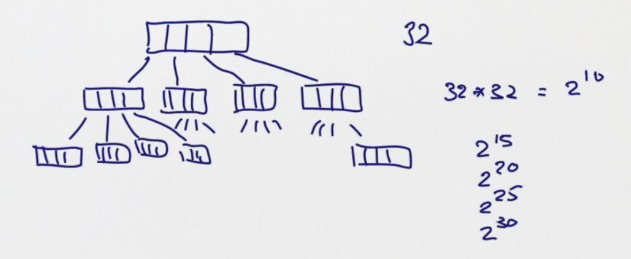
vector

List: is linear -- access to head is faster than middle or end element. Vector: better rand access performance.

represented as very shallow trees(32-split at each node)

Vector support similar operations as List (head, tail,map, fold …

5.1 - More Functions on Lists

already known methods:

xs.head
xs.tail

sublist and ele access:

  • xs.length
  • xs.last
  • xs.init: all elementh except last element
  • xs.take(n): sublist of first n elements
  • xs.drop(n): the rest of list after taking first n elements
  • xs(n …

R里面的统计函数有很多, 这里只用线性模型lm以及(一维)非参估计最常用的三个smoother: Nadaraya-Watson kernel(NW, ksmooth), Local Polynomial(LP, loess), Smoothing Spline(SS, smooth.spline). 用这三个smoother作为例子, 介绍R里面统计回归的一些用法.

数据的形 …

R关于绘图应该可以写很多, 不过这里只列举在compstat这门课里最经常用的几个函数. 关于R的绘图, 详细了解可以运行 demo(graphics)或者 example("plot").

R里面的绘图命令分为两类: 一类是"high-level"的"创建新图片"命令, 运行以后会新画一个图 …

首先, R似乎默认所有的变量都为向量vector, 即使一个单独的数字也是长度为1的, 所以1等价于c(1).

> a <- 1
> a
[1] 1
> length(a)
[1] 1
> a[1]
[1] 1
> typeof(a)
[1] "double" # means "double vector" (I think)
> 1 == c …

这个"从入门到放弃"系列是为了应付eth的computational statistics这门课... 对R无爱...

terminology

首先在stat里面有一些叫法和以前不太一样:

  • predictor variable: 就是机器学习里面说的feature (Xi)
  • design points: 是机器学习里 …

问题: 现在本地ssh连接eth的daint服务器, 连接需要进行两次ssh: 第一次本地连接到ela服务器, 第二次从ela再次ssh到daint. 现在配置本地的ssh代理使之可以一次完成.

第一步: 生成sshkey

ssh-keygen
cat ~/.ssh/id_rsa.pub …

4.1 - Objects Everywhere

scala is pure OO: every value is an obj, every operation is a method of obj.

scala.Int scala.Boolean maps to JVM standard primitive types.

Implement Boolean withous primitive type in scala:

Then defin false and true as objects, give implementation for ifThenElse() funciton:

object …

This week, we'll cover traits, and we'll learn how to organize classes into hierarchies. We'll cover the hierarchy of standard Scala types, and see how to organize classes and traits into packages. Finally, we'll touch upon the different sorts of polymorphism in Scala.

3.1 - Class Hierarchies

abstract class

abstract …