This week, we'll cover traits, and we'll learn how to organize classes into hierarchies. We'll cover the hierarchy of standard Scala types, and see how to organize classes and traits into packages. Finally, we'll touch upon the different sorts of polymorphism in Scala.
This week, we'll learn about functions as first-class values, and higher order functions. We'll also learn about Scala's syntax and how it's formally defined. Finally, we'll learn about methods, classes, and data abstraction through the design of a data structure for rational numbers.
2.1 ...
In this week, we'll learn the difference between functional imperative programming. We step through the basics of Scala; covering expressions, evaluation, conditionals, functions, and recursion
1.1 - Programming Paradigms
imperative programming:
- modify mutable variables
- using assignments
- control structures: if-else, loops, break, continue, return, etc.
~~~> Von Neumann computer:
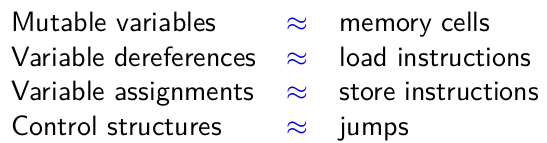
conceptualize data ...
Get up and running with Scala on your computer. Complete an example assignment to familiarize yourself with our unique way of submitting assignments.
Tool setup
IntelliJ
use worksheet as a better REPL
SBT
navigate to the directory of the assignment you are working on, then start sbt.
(when first running ...
problems with text:
- often very rare word is important, e.g. retinopathy
- ambiguity: e.g. cat and kitty
→ need a lot of labeled data ⇒ not realistic.
⇒ unsupervised learning
similar words appear in similar context.
embedding: map words to small vectors
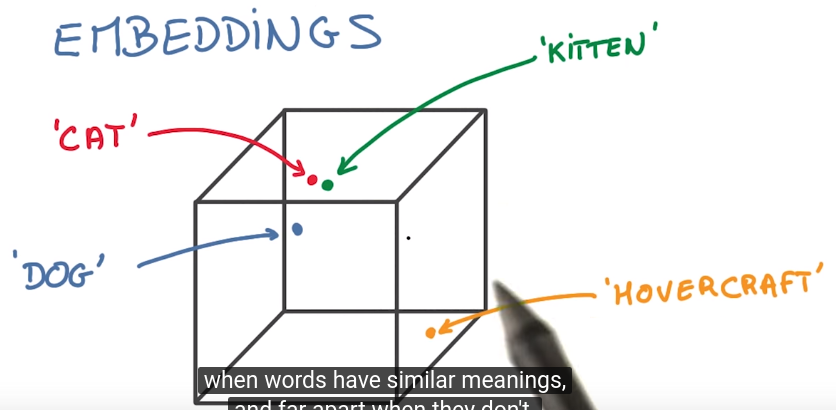
measure the closeness by cosine distance:
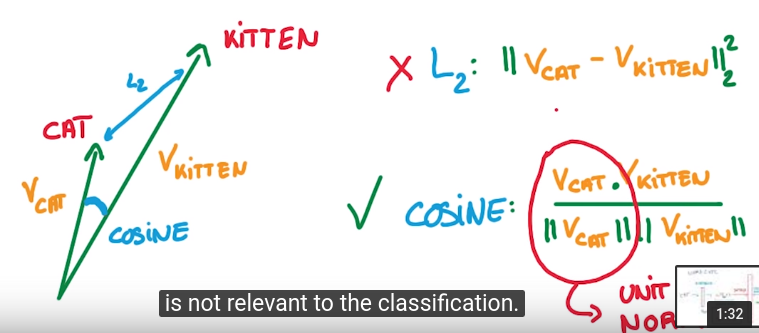
word2vec
initial: random vector ...
statistical invariance → weight sharing
e.g. image colors, translation invariance...
convnet
is NNs that share their weights across space.
convolution: slide a small patch of NN over the image to produce a new "image"
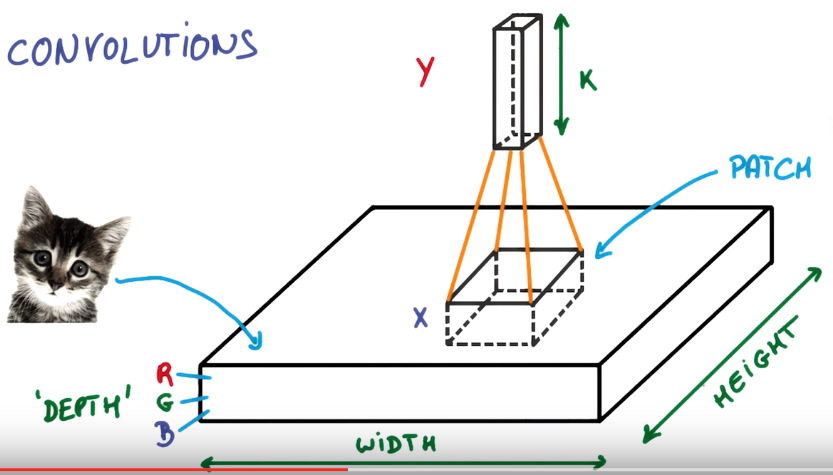
convnet forms a pyramid, each "stack of pincake" get larger depth and smaller area.
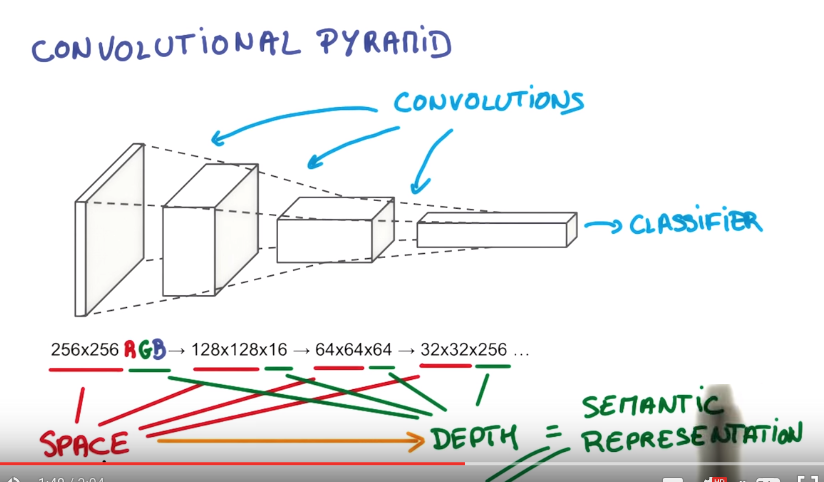
convolutional lingo ...
Linear models
matrix multiplication: fast with GPU
numerically stable
cannot cocatenate linear units → equivalent to one big matrix...
⇒ add non-linear units in between
rectified linear units (RELU)
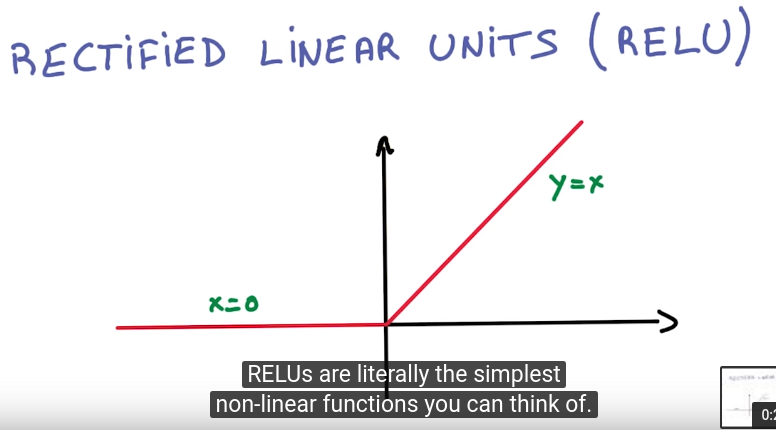
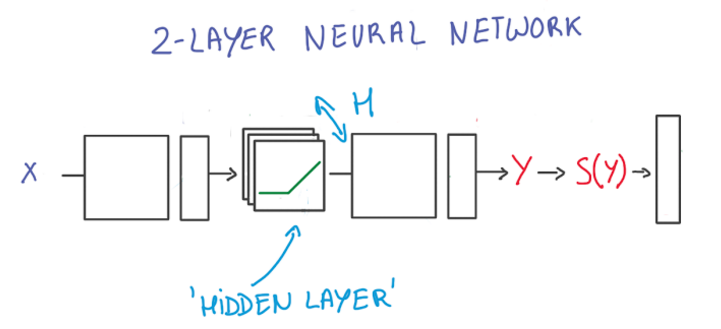
chain rule: efficient computationally
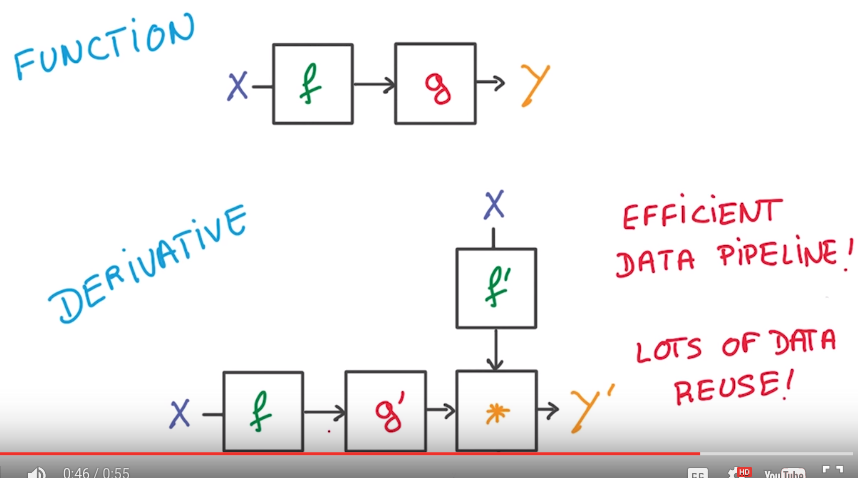
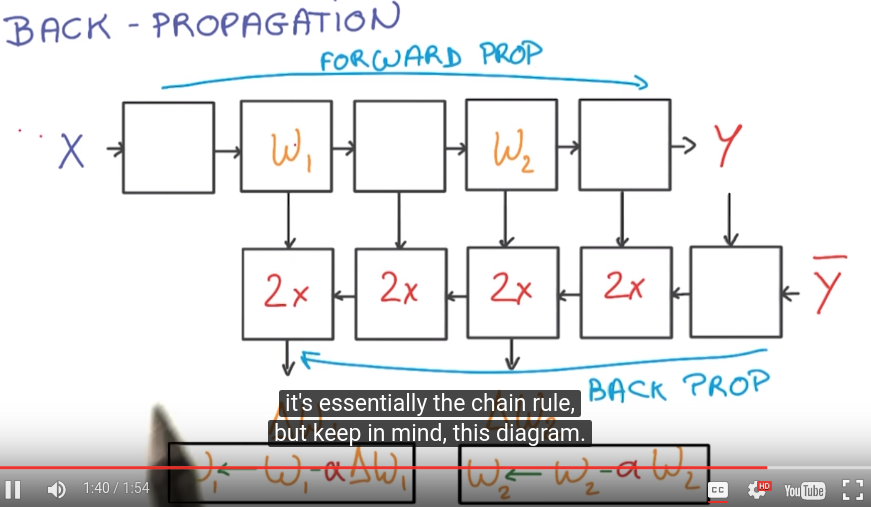
back propagation
easy to compute the gradient as long as the function Y(X) is made of simple blocks ...
这是udacity上deeplearning的笔记, 做得非常粗糙, 而且这门课也只是介绍性质的... https://www.udacity.com/course/deep-learning--ud730
Softmax function
socres yi ⇒ probabilities pi
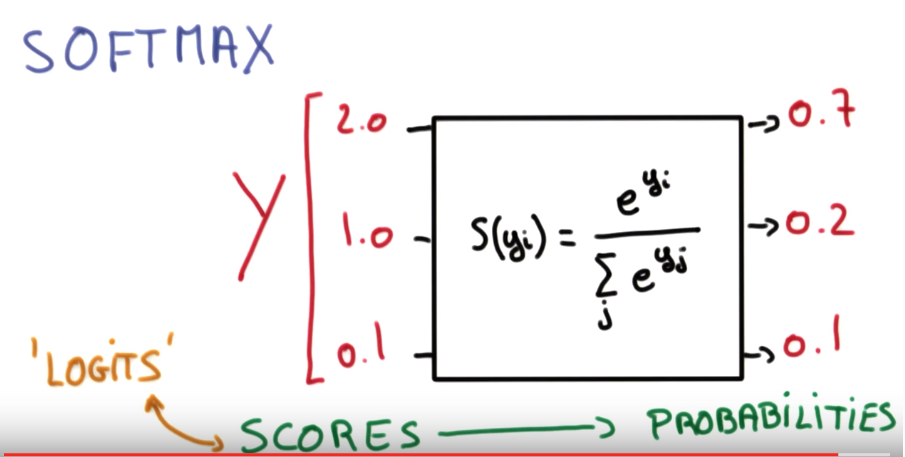
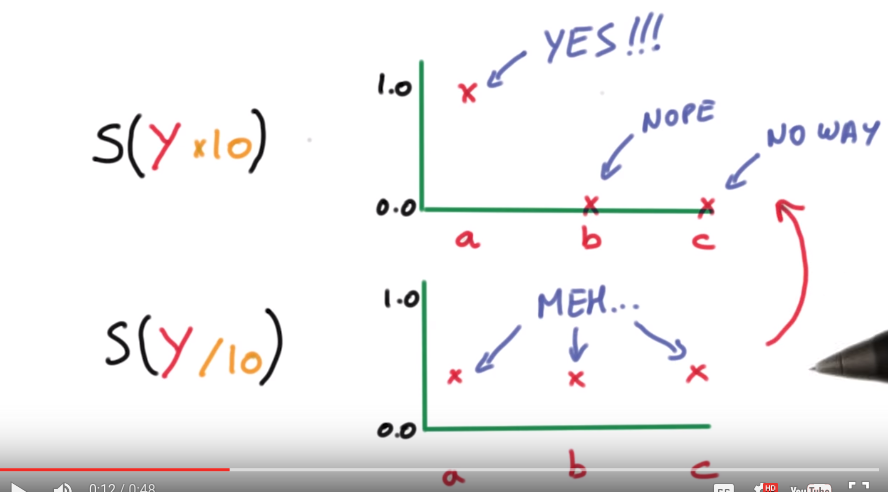
property: smaller scores ⇒ less certain about result
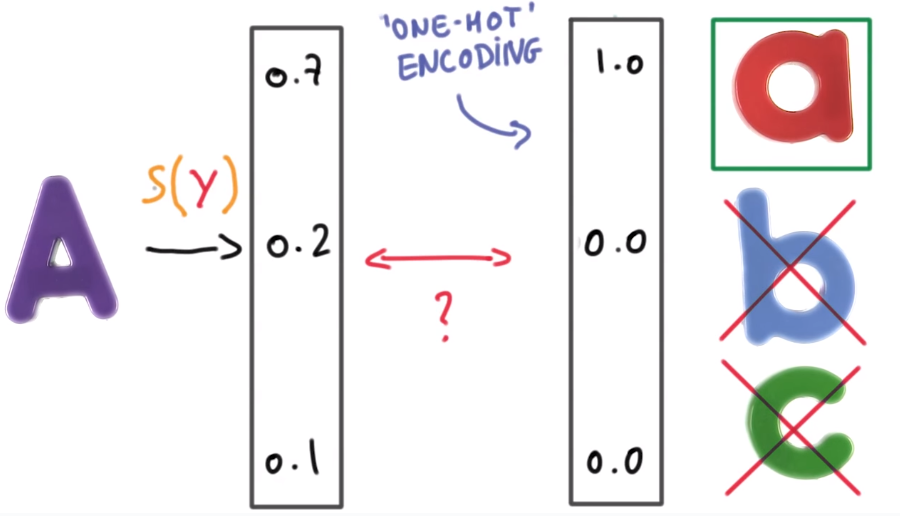
Onehot encoding
Cross entropy
measure how well the probability vector S corresponds to the label vector L.
⇒ cross entropy D(S,L)( D>=0, the smaller the better ...
总结一下用python撸codejam时常用的一些库, 并且给一些简单的例子. 发现用python撸codejam非常合适: codejam的时间要求不严格(4/8分钟), 而且程序只要本地运行. 正好可以使用python简洁的语法和丰富的函数库.
collections
py自带的一些好用的数据结构...
https://docs.python.org/2/library/collections.html
from collections import Counter, deque, defaultdict
itertools
主要是用来穷举的时候它里面一些函数很好用...
https://docs.python.org/2/library/itertools.html
>>> from itertools import product, combinations
>>> a = 'ABCD'; b='EFG'
>>> for p in product(a,b):
print ...昨天做的一道codejam题目, 这个题目的三种解法都非常有代表性, 特此一记.
题目链接在这里:
https://code.google.com/codejam/contest/8234486/dashboard#s=p2
Elliot's parents speak French and English to him at home. He has heard a lot of words, but it isn't always clear to him which word comes from which language! Elliot knows one sentence ...